 Granada Hills Appliance Repair
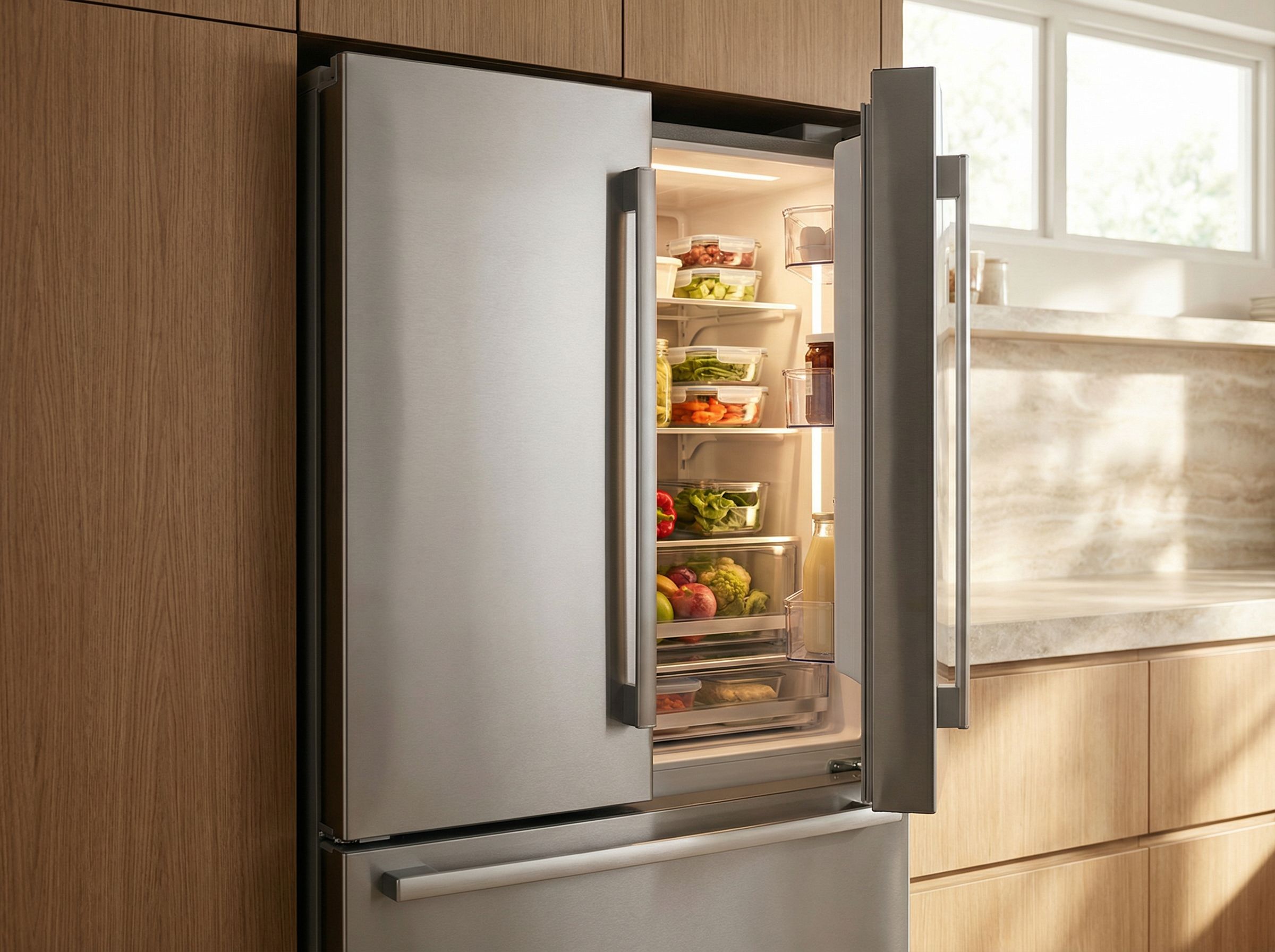
Every July and August, my phone fills up with the same call. “Our garage freezer died and we just lost $400 of Costco meat.” Granada Hills is second-fridge country — the lots up here are big, the garages are big, half the neighborhood shops in bulk, and almost every house north of Rinaldi has a spare fridge or a chest freezer sitting against a garage wall. I’ve been fixing them since 1989, and I can tell you exactly why they die, why they die here, and why they almost always die in the same two weeks of summer.
Your Garage Is an Oven
Here’s the number people don’t want to hear. On a 105°F Valley heat wave day — and Granada Hills gets several of those every summer — an unconditioned, uninsulated garage with the door closed hits 110 to 120°F inside. West-facing garage doors are worse. I’ve put a thermometer on a garage wall off Zelzah in late August and read 118°F at 5 p.m.
A refrigerator doesn’t create cold. It moves heat from inside the box to the coils outside the box, and that transfer only works if the surrounding air is cooler than the coils. The hotter the garage, the harder that transfer gets. At 90°F ambient, a typical fridge compressor is already working overtime. At 115°F, it may run continuously for hours — no rest cycle, no cooldown, head pressure through the roof, oil breaking down, windings hot enough to trip the overload protector. Every heat wave afternoon is a stress test. String twenty of those afternoons together, which is a normal Granada Hills summer, and you’re aging that compressor at triple speed.
That’s why the cheap garage fridge — the $500 special, or the old kitchen unit that got demoted when you remodeled — reliably dies in three to four summers out here. It’s not bad luck. It’s arithmetic. A compressor designed to run maybe 8 hours a day for 12-15 years instead runs 20+ hours a day for four months a year, at temperatures its designers never planned for.
“Garage-Rated” Is Real, Not Marketing
People assume “garage-ready” is a sticker slapped on to charge more. It’s actually a specification, and it matters on both ends of the thermometer.
A standard refrigerator is designed to operate in roughly 55-90°F ambient air — kitchen conditions. A garage-rated unit is built for something like 0-110°F. The differences are physical: a larger or higher-duty compressor, more condenser surface, better fan airflow, and thermostat logic that behaves correctly outside the kitchen range. The cold end matters too, by the way — even in Granada Hills, a garage can drop into the 40s on a January night, and a standard fridge’s thermostat gets confused when ambient air is colder than the fridge’s own setpoint. The compressor barely runs, and your freezer section slowly thaws while the fridge section is fine. People blame a “bad freezer” in winter when the real culprit is a kitchen appliance living outdoors.
If you’re buying a unit specifically to live in a Granada Hills garage, buy garage-rated. The premium is usually $100-200. Divided over the extra summers you get, it’s the cheapest insurance in the appliance world.
The Dirty-Condenser Death Spiral
Garages are dusty. Drywall dust, lawn equipment, cardboard fuzz from all those Costco boxes, pet hair if the dog sleeps out there. All of it gets pulled into the condenser coils — the radiator that dumps the heat.
Here’s the spiral. Dust blankets the coils, so the coils shed heat poorly. The compressor runs longer to compensate. Longer run time pulls more air through the coils, which deposits more dust. The blanket thickens, run time stretches further, and internal temperatures creep up until either the food warms or the compressor’s thermal overload starts cycling it off on the hottest afternoons — which is exactly when you need it most. I’ve pulled condenser mats off Granada Hills garage fridges that looked like gray felt carpet padding. That unit wasn’t broken. It was suffocating.
A dirty condenser in a 115°F garage is the single most common cause of the “it died during the heat wave” call. And it’s the most preventable failure I see all year.
Prevention That Actually Works
Not a twelve-point checklist. Three things, done for real:
1. Placement is half the battle. Put the unit against the coolest wall in the garage — the north wall, or any wall shared with the house, which stays 15-20 degrees cooler than a west-facing exterior wall in the afternoon. Never against the west wall, never where sun through a window hits it, never dead in front of the garage door where opening it blasts the unit with 100°F air. And give it room to breathe: 3-4 inches behind, a couple inches on the sides, more if the manual says so. I’ve seen chest freezers shoved into corners so tight the condenser was rebreathing its own exhaust.
2. Vacuum the coils twice a year — and make one of those times June. Kitchen fridges can get away with annual coil cleaning. Garage units cannot. Unplug it, pop the base grille or the rear access panel, and vacuum the coils with a brush attachment. Ten minutes. Do it the first week of June, before the heat arrives, and again around New Year’s. If you’d rather we do it, we’ll clean coils as part of any service visit.
3. Manage the garage itself on heat wave days. Cracking the garage door a few inches in the evening to flush the trapped heat drops the overnight ambient meaningfully. Some of my Porter Ranch and Granada Hills customers put a cheap box fan on a timer near the unit for August afternoons. Crude, but moving 118°F air across the coils beats stagnant 118°F air, and the fan costs pennies a day.
Repair or Replace: The Honest Math
When a garage unit does die, here’s how I’d advise my own family:
- Fan motor, thermostat, relay/overload, door gasket: fix it. These are typically $150-350 repairs and the unit has life left.
- Sealed-system leak or dead compressor on a budget unit: don’t fix it. Compressor replacement runs $600-900 with labor and refrigerant. On a fridge that cost $550 new and has already eaten three Valley summers, that money is gone the moment the next heat wave hits.
- Dead compressor on a quality garage-rated or commercial-style unit: sometimes worth it. If the box is well-built and under 6-7 years old, a compressor job can pencil out. We’ll tell you straight.
And yes — there are calls where the honest answer is “buy a used replacement.” A clean used chest freezer runs $150-300 on any given weekend in the Valley, and chest freezers are the cockroaches of refrigeration; the good ones outlive everything. If your dead unit needs a $700 repair and a $250 used freezer solves the problem, I will tell you to buy the used freezer. Our service call is $85, waived if you proceed with a repair, and part of what that buys you is a no-spin verdict.
Before August Gets Here
If your garage fridge or freezer made it through last summer wheezing — running constantly, warm spots, frost where there wasn’t frost before — get it looked at now, in the mild weeks, not during the heat wave when it finally quits and takes a freezer full of food with it.
Call us at (818) 330-5907 for same-day service across Granada Hills, Porter Ranch, Northridge, and the northwest Valley. Bring us your suffocating garage fridge. We’ve met a few hundred of them.
Granada Hills Appliance Repair has served the San Fernando Valley since 1989. We service all makes and models with a 30-day labor warranty and 90-day parts warranty on every repair.