 Granada Hills Appliance Repair
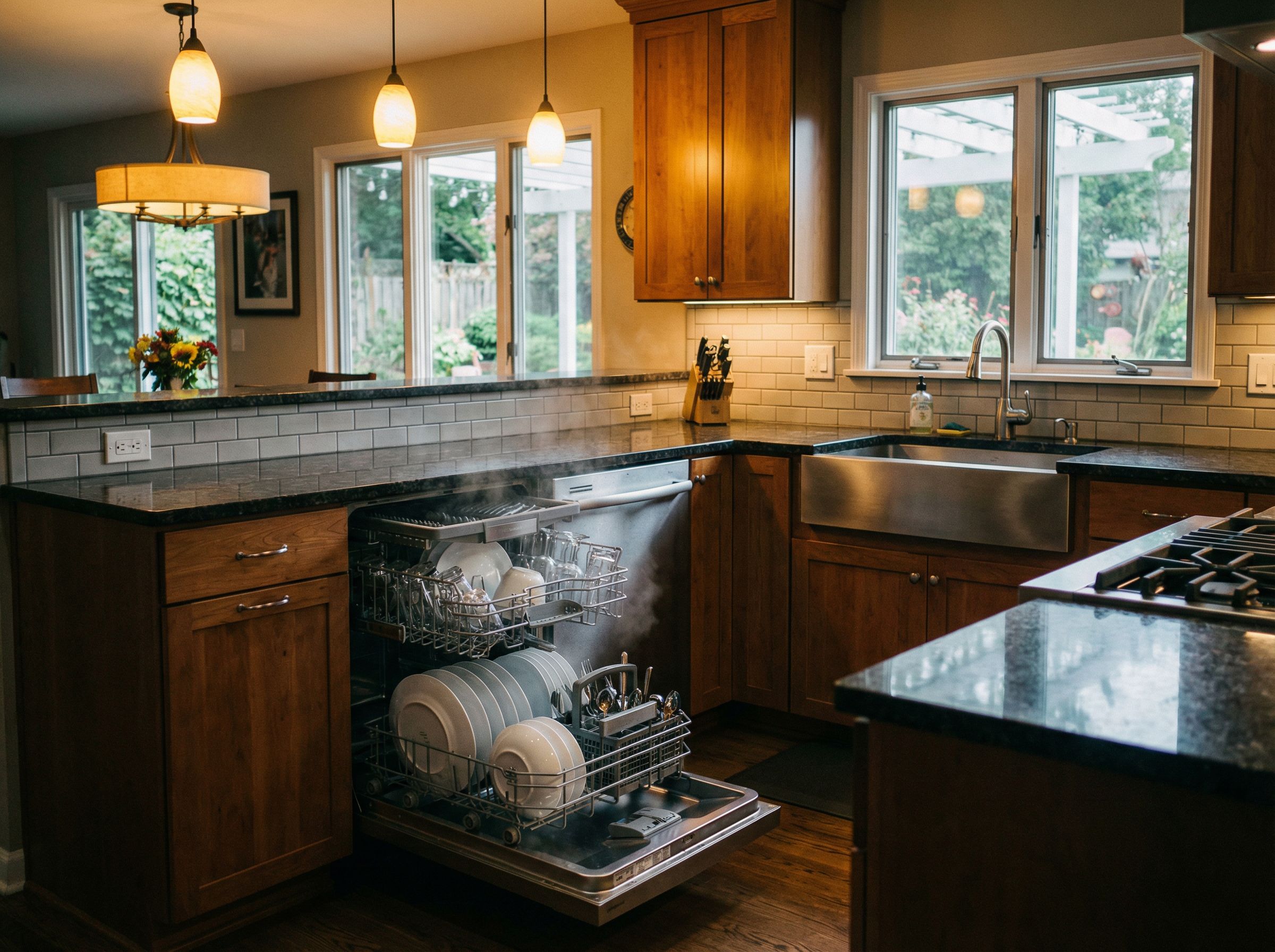
If you’ve lived in Granada Hills more than a few years, you already know the tells: white crust ringing the faucet aerators, a filmy haze on drinking glasses no matter how good the dishwasher soap is, and shower doors that need a razor blade to look clean again. That’s not a cleaning problem. That’s the San Fernando Groundwater Basin coming out of your tap, and it is some of the hardest water LADWP delivers anywhere in the city.
Most of the northwest Valley — Granada Hills, Porter Ranch, Mission Hills, North Hills, and Sylmar — draws a heavy share of its supply from local groundwater wells rather than the softer imported water that reaches parts of the Westside. Depending on the well field feeding your street in a given month, hardness readings in this basin commonly run in the 15-20 grains per gallon range (roughly 250-350 ppm) — solidly in “very hard” territory on any water utility’s chart. I’ve been repairing appliances up here since 1989, and hard water is one of the two or three biggest reasons appliances in this part of the Valley fail years before they should.
What Hard Water Actually Does Inside an Appliance
Hard water carries dissolved calcium and magnesium. Every time an appliance heats that water — and dishwashers, washers, and ice makers all do — the minerals drop out of solution and deposit as scale on whatever surface is hottest: heating elements, valve seats, spray arm jets, and the tiny passages inside water inlet valves. Scale doesn’t wash away. It builds, layer on layer, on a timeline measured in months, not years.
Dishwashers take the worst of it because they combine heat and low water volume. Scale coats the heating element, reducing its ability to transfer heat efficiently, so wash cycles run longer and dry poorly. It clogs the tiny holes in the spray arms, which is the actual cause behind most of the “my dishwasher stopped cleaning well” calls I get in Granada Hills — not a broken pump, just mineral-blocked jets. It also builds up inside the water inlet valve until the valve can’t seal fully, which either underfills the tub or drips constantly.
Washing machines scale up inside the heating element (if yours heats water internally) and, more commonly out here, inside the water inlet valve screens and the drum’s water-level pressure sensor tubing. Scale-stiffened rubber gaskets and door boots crack sooner. And detergent doesn’t lather or rinse properly in hard water, so residue builds inside the drum and hoses — a second layer of gunk on top of the mineral scale.
Ice makers and refrigerator water lines are where I see the most expensive damage. The fill valve and the narrow tubing that feeds the ice mold are small-diameter by design, and scale is a small-diameter problem’s worst enemy. A fridge that makes smaller and smaller ice cubes, then hollow or oddly shaped cubes, then no ice at all, is very often a scale-narrowed water line — not a failed ice maker module, which is the $250-400 part most people replace unnecessarily before anyone checks the actual water path.
Why It’s Worse in Granada Hills Specifically Than in Softer-Water Neighborhoods
A lot of the tract housing stock up here — the Granada Hills, Porter Ranch, and North Hills ranch and split-level homes built through the 1960s and 70s — was plumbed and appointed for the water chemistry of its era, with appliances sized for a 10-15 year service life under normal conditions. Nobody designed those systems around 300 ppm hardness running through them continuously for decades. When a 12-year-old dishwasher in this part of the Valley dies of a cracked heating element or a seized inlet valve, hard water scale is very often the accelerant, not just bad luck. We also see it compound with our hot Valley summers: appliances already running harder in garage heat (see our piece on garage freezers) are simultaneously fighting mineral buildup inside their own plumbing.
What Actually Slows the Damage Down
- A whole-house water softener is the real fix, not a bandage. Installed at the point where water enters the house, it swaps calcium and magnesium for sodium before the water ever reaches an appliance. Expect $1,500-3,500 installed for a quality system, which sounds steep until you compare it to replacing a dishwasher, a washer, and an ice maker every 6-7 years instead of every 12-15.
- Descale dishwashers and washers quarterly. A cup of citric acid or a commercial descaler (Affresh, Glisten) run on an empty hot cycle dissolves scale before it hardens into a real blockage. This is the single cheapest thing a Granada Hills homeowner can do.
- Replace refrigerator water filters on schedule. Many filters have a scale-reducing component, and a saturated filter accelerates mineral deposits downstream in the ice maker line.
- Don’t ignore a slow ice maker. Reduced ice production is the earliest, cheapest-to-fix warning sign of a scaling water line. Left alone, it usually ends in a full inlet valve or tubing replacement instead of a simple flush.
When to Call Us
If your dishwasher isn’t drying dishes, your washer is leaving mineral residue on dark clothes, or your ice maker’s output has been shrinking for weeks, that’s scale talking — and it’s almost always cheaper to address now than after a valve fails or an element cracks. Our $85 diagnostic tells you exactly where the buildup is and whether a descale-and-clean solves it or a part needs replacing, and it’s waived if you move forward with the repair.
Call us at (818) 330-5907. We service Granada Hills, Porter Ranch, Mission Hills, Sylmar, North Hills, and the rest of the northwest Valley, and we see this exact problem on nearly every street up here.
Granada Hills Appliance Repair has served the San Fernando Valley since 1989. We service all makes and models with a 30-day labor warranty and 90-day parts warranty on every repair.